For Jamia Kenan, who leads strategic social storytelling and employee-generated content at Sprout Social, the answer isn’t to treat employee creators as another marketing channel to control.
Here are four EGC headaches marketers can solve without killing the magic.
Friday Feature

1. Stop trying to control every word
Companies often overthink employee-generated content, trying to control every detail. It’s the same mistake brands make with creator campaigns: They hand over a brief with strict walls and deny creative control.
“Don't ruin the magic of why you're working with the creator,” Kenan says.
TikToker @bran__flakezz nails the creator's POV in his #ProteinPennePartner parody, captioned, “it’s always be authentic, but also let us tell you what to say.” 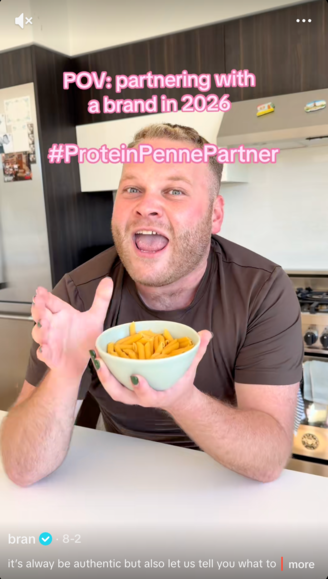
Kenan starts with a concept and a draft script that includes the key messages and phrases she needs. “Then I hand it over, and the talent finesses it into their own voice,” she says. “They may even share their own ideas for concepts.”
She also encourages employees to freestyle, reminding them that they aren’t tied to the original wording as long as the core message and story come through. “The structure comes from us, but the voice comes from them,” she says.
Kenan points to Sprout Social’s LinkedIn Live with Corporate Sween as an example. The team aligned on expectations beforehand but wanted him to show up as the hilarious character his audience already knew and loved.
Kenan’s rule of thumb? “Let them cook, and come back to the kitchen when the meal is done.”
2. Don't panic when an employee becomes bigger than the brand
What happens when an employee becomes more recognizable than the company they work for? Or when that person leaves and takes their audience with them?
It can feel like a loss of control. But Kenan sees another way to look at it.
“If an employee outshines the brand, that means they built something worth watching,” she says.
Quinta Brunson’s success after BuzzFeed is a good example of how talent can carry that recognition from one organization into the next. “Every time I watch Abbott Elementary, I think of the BuzzFeed alumni of the 2010s,” Kenan says. “That era of employee talent had everyone applying for jobs and internships there.”
Her advice? Treat former employee creators as alumni and ambassadors, not lost assets.
Maintain relationships, celebrate their achievements, and look for opportunities to collaborate when it makes sense.
3. If you want creators, give them a reason to participate
Kenan says brands should consider compensation for employee creators, particularly if they want consistent participation and a program that can grow.
“We aren't compensating employees for this yet, but brands should pursue it,” she says. “You have to make it worth it.”
The brands doing it well are building real structures. “Dick's Sporting Goods launched its Varsity Team in 2023, with paid social contracts, free product, features in brand marketing, early access to launches, exclusive events, and professional development,” she says. “Gap opened its Creator Affiliate and Advocacy platform to all employees this July, across offices, stores and distribution centers, so they can earn commissions on products they share.”
She believes that enthusiasm can help launch an employee creator program, but a sustainable program needs to recognize the work involved.
How to solve it: Match incentives to the commitment you’re asking employees to make.
4. Think beyond the next video
Companies can become so focused on producing employee videos that they miss the wider potential of the people creating them.
At Sprout Social, the employee creator program grew from a pilot group of six to a global network of around 100 employees. In 2025, those creators accounted for nearly 30 percent of the company's video impressions, despite making up less than 8 percent of its content mix.
As participants became more comfortable on camera and gained visibility across the company, their contributions began extending into other areas of marketing, including in-person events and product launches.
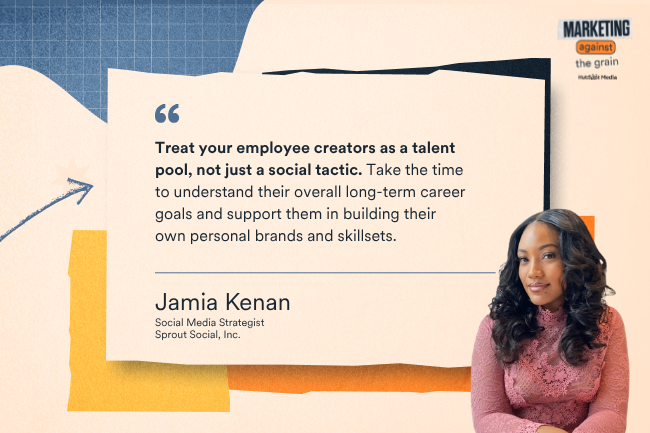
“Treat your employee creators as a talent pool, not just a social tactic. Take the time to understand their overall long-term career goals and support them in building their own personal brands and skillsets,” she says.