
I have, across my personal and professional inboxes, 74,894 unread emails.
So I definitely related when Matt McGarry told me, “People don’t want to spend a ton of time in [their inbox].” (And yes, I am aware of the irony here, since my entire job involves trying to get marketers to read an email newsletter.)
What does it take for an email marketer to reach somebody like me?
Meet the Master
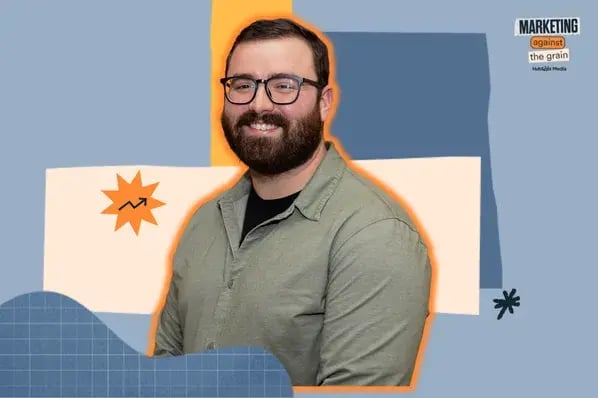
Matt McGarry
Founder and CEO, GrowLetter
Claim to fame: Before starting GrowLetter, Matt was the growth marketing manager for our sister newsletter, The Hustle.
Lesson 1: Stop thinking of your newsletter as a content channel.
If your newsletter is regurgitating content from your blog, YouTube, or LinkedIn — even if it’s performing well on those platforms — it’s time for a rethink.
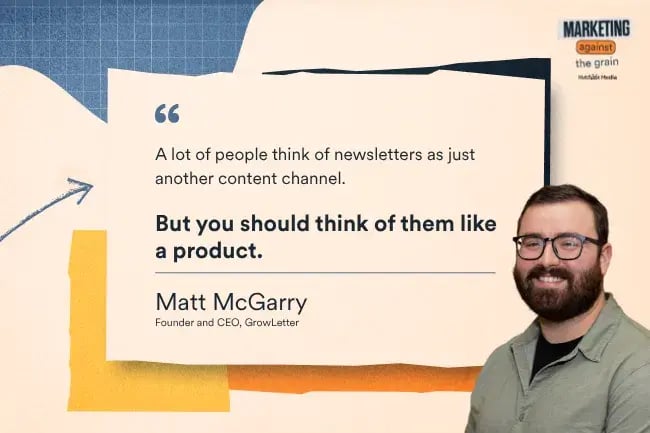
“A lot of people think of newsletters as just another content channel,” McGarry explains. But “you should think of them like a product.”
And, like any product, your newsletter needs to solve a specific problem for your specific audience. That’s what every newsletter with off-the-chart engagement has in common, McGarry says.
“If it’s 1440 Media,” for example, “they’re giving you comprehensive news in under five minutes. If it’s Tim Ferriss’ 5-Bullet Friday, he‘s helping you discover new things that improve your life that you probably wouldn’t have heard of otherwise.”
Plus, email is durable. It’s been around for decades, even when other platforms (looking at you, X) suddenly start bleeding users.
Invest in your email newsletter now, and “that investment is probably going to compound for a very long time.”
In today’s algorithmic world, that’s a pretty strong case for email.
Lesson 2: Be more clickable.
It’s almost too obvious: To make your email newsletters more clickable, add more hyperlinks.
McGarry suggests adding “a curated section — whether that’s curated links, your favorite finds, articles, other blogs, other podcasts, things like that.”
He also says it’s “always good to have an ad or promotional section. Even if you don't have an advertiser or a sponsor,” a recurring section to promote your own free products, a YouTube video, or podcast can keep your readers clicking.
I ask McGarry if there’s a limit to this. How many hyperlinks is too many? “I’ve never seen a hard limit,” he says. But “I do think it can become overwhelming when there’s more than 10 to 20 links throughout the entire newsletter.”
This lesson isn’t just about engagement, it’s about deliverability. “If people are interacting and clicking, you're more likely to stay and show up in [the primary inbox].” And that means you’ll get even more readers who will engage and click.
Lesson 3: The source of your subscribers matters more than the size of your list.
Some media companies and creators “become very obsessed with [the question of] how much money do I make on average from somebody who subscribes to my free newsletter,” McGarry says.
But these calculations get tricky because the numbers can vary a lot — among his clients, he sees returns of anywhere from $3 to $30 per subscriber, depending on the business model.
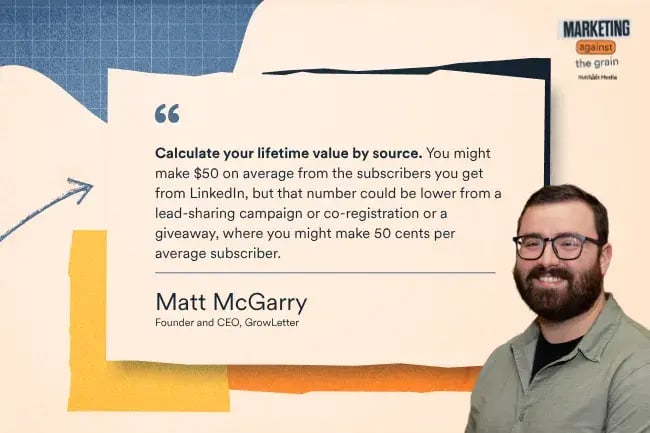
Instead, calculate the lifetime value by source. “You might make $50 on average from the subscribers you get from LinkedIn, for example.” But that number could be lower from “a lead-sharing campaign or co-registration or a giveaway, where you might make 50 cents per average subscriber.”
Try this at home, no math degree needed: Export all the subscribers from your email service provider. Then export all the buyers from your point-of-sale software (like Stripe). Put both into ChatGPT and “have it match emails and identify the signup source of where the buyers came from. Ask it to calculate your lifetime value that way.”
Calculating LTV by source helps you determine where to spend and where to cut. Now all you have to do this week is run the numbers.
Lingering Questions
This Week’s Question
“Podcasts and email share a wonderful privilege: they arrive in places I check habitually. My email app and podcast app are two of the first things I look at every day. I‘m choosy about what I allow to appear in each. I’m also fickle, and ruthlessly cull my inbox and podcast queue. Once someone has allowed a newsletter into their inbox, what are the most effective ways to continue to earn a place in that privileged spot?”
—Dan Misener, Co-founder, Bumper
This Week’s Answer
McGarry says: Set the expectations early, and then deliver on those expectations.
On your thank you page and welcome email, tell people exactly what they‘re going to get. When you send emails, what’s inside and exactly what to expect. Then, deliver that on each week consistently. If you say you're going to send a newsletter about certain topics every Friday, do that every week. When you send marketing emails, give people a way to opt out of the campaign without unsubscribing from your newsletter completely. If you want to increase your sending cadence, let people know. Talk to your email audience just like you would a real person.
Overcommunicate, too. Not everyone will see each email. Make sure it‘s extremely clear how things are changing when they are. Don’t be afraid to overshare.
Great newsletters are like a letter to a friend. Treat them that way.
Next Week’s Lingering Question
McGarry asks: Won‘t paid subscribers be lower quality than organic ones? How do I know they’ll actually open my emails and buy?
![The Tiny Layout Tweak That Led to 20% More Conversions [Test Results]](https://marketingagainstthegrain.com/hubfs/rebecca-hinton-matg-blog.webp)

![Stop wasting homepage traffic [3 big mistakes backed by 10+ years of data]](https://marketingagainstthegrain.com/hubfs/angela-gomez-matg-blog.webp)


