
Which is exactly why it’s a smart business to be in.
Our guest this week knows that firsthand. Former HubSpotter David has built a $10 million pickleball brand and did it mostly on his own (he hired his first employee this year) — but what surprised me most wasn’t how big the pickleball market is. It’s how much his story speaks to the fundamentals of entrepreneurship… and even software.
Meet the Master
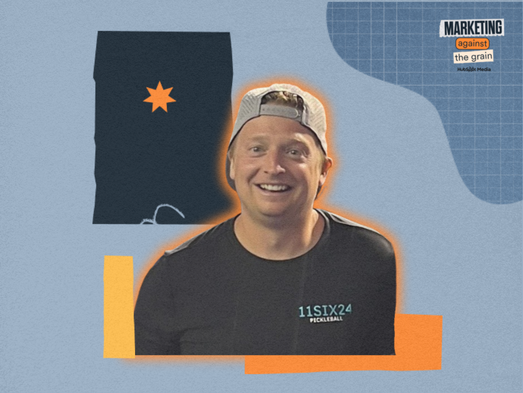
David Groechel
Founder, 11SIX24 Pickleball
Fun fact: He guessed the exact number of Jelly Beans in a jar once (11,624), which is why his company is named 11SIX24.
1. Audit “cousin markets” to break tunnel vision.
When Groechel wants to know if he's hitting the right notes with his website, he doesn't look at other pickleball brands.
He checks out tennis racquets.
"You get tunnel vision when it's your product, or even your industry," he explains. "When I go on competitors' websites, it's hard to imagine what it looks like from a consumer's standpoint."
Most of your customers don't know as much about your product, or your industry, as you do. So perusing your website with the goal of seeing it through their eyes is probably wasted effort.
As Groechel explains, "I started learning about tennis racquets because I haven't played in so long, and it made me realize — wow, my whole website experience is terrible. Like, if someone's trying to find this or that, how would they?"
When you need a fresh perspective, go shopping in a cousin industry. If you sell social media reporting software, maybe that means scrolling CRM websites.
2. Be part of the conversation before trying to lead one.
Groechel is a big believer in community‑driven businesses — which tracks, given that pickleball itself is built around local courts, group chats, and word of mouth.
That philosophy shows up in how he’s grown the brand. Today, Groechel has more than 4,000 ambassadors across the country, many of whom promote the paddles organically on social and in person at their local courts. He keeps the most active ambassadors especially close, with WhatsApp groups where top sellers get early updates directly from Groechel himself.
Online, he doubles down on accessibility. He hosts regular Instagram and Facebook Lives to answer questions, give updates, and stay visible — not as a brand, but as a founder.
But his most effective community play isn’t about building something new. It’s about showing up where people already are. Groechel regularly jumps into existing Discord chats and Reddit threads, helping grow communities he doesn’t even own.
"I've helped make someone else's Discord community really big," he says with a laugh, "because it's hard to start your own. I also hop onto Reddit and answer questions there, because that's where everyone already is."
And when he’s there, he doesn’t pitch his paddles. He helps.
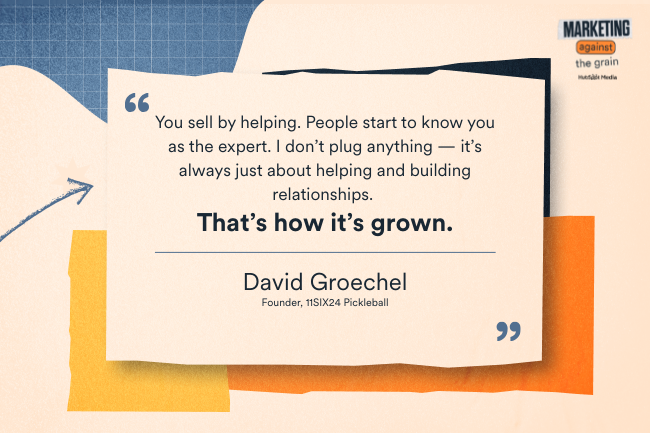
“You sell by helping,” Groechel told me. “People start to know you as the expert. I don’t plug anything — it’s always just about helping and building relationships. That’s how it’s grown.”
3. Don’t hide behind the logo. Show up as yourself.
One piece of Groechel’s success? He’s leaned all the way into being founder-forward.
“I’m in front of the camera a lot. I absolutely hate it,” he admits. “But it’s like, hey, I want to grow, this is something I want to do… people appreciate that authenticity.”
We’ve talked about the power of founder-led brands before, and the rule still applies — especially in an AI-saturated world, people want to follow people, not faceless corporations.
Groechel saw that firsthand when he told his community he was shooting a commercial with Howie Mandel. Their response?
“Everyone goes, ‘So you’re going to be in it too, right?’ They were more excited to see me than Howie Mandel.”
And when your audience wants to see you more than they want to see Howie Mandel… you know something's working.



![The Tiny Layout Tweak That Led to 20% More Conversions [Test Results]](https://marketingagainstthegrain.com/hubfs/rebecca-hinton-matg-blog.webp)


![Stop wasting homepage traffic [3 big mistakes backed by 10+ years of data]](https://marketingagainstthegrain.com/hubfs/angela-gomez-matg-blog.webp)


