.webp?width=48&height=48&name=BrianneGarrett_Headshot%20(1).webp)
Friday Feature

Don’t be afraid to burn it down to build it up
“The word ‘redesign’ does not mean change the color of the carpet,” says El Gazzar. It’s deeper than that.
One event she worked with ran its program from 8 to 5, with no space in between breakouts. Her agency carved out time for attendees to just talk, and created attendee profiles so people could find each other. Speakers held meet-and-greets; questions came in before sessions even started.
Her team also rethought the stuffy stage setup, starting with the oversized armchairs nobody could get out of — “God forbid you’re in a skirt,” says El Gazzar. They even created anthem songs to kick off each morning, plus walk-up music celebrating the day’s sponsors and speakers.
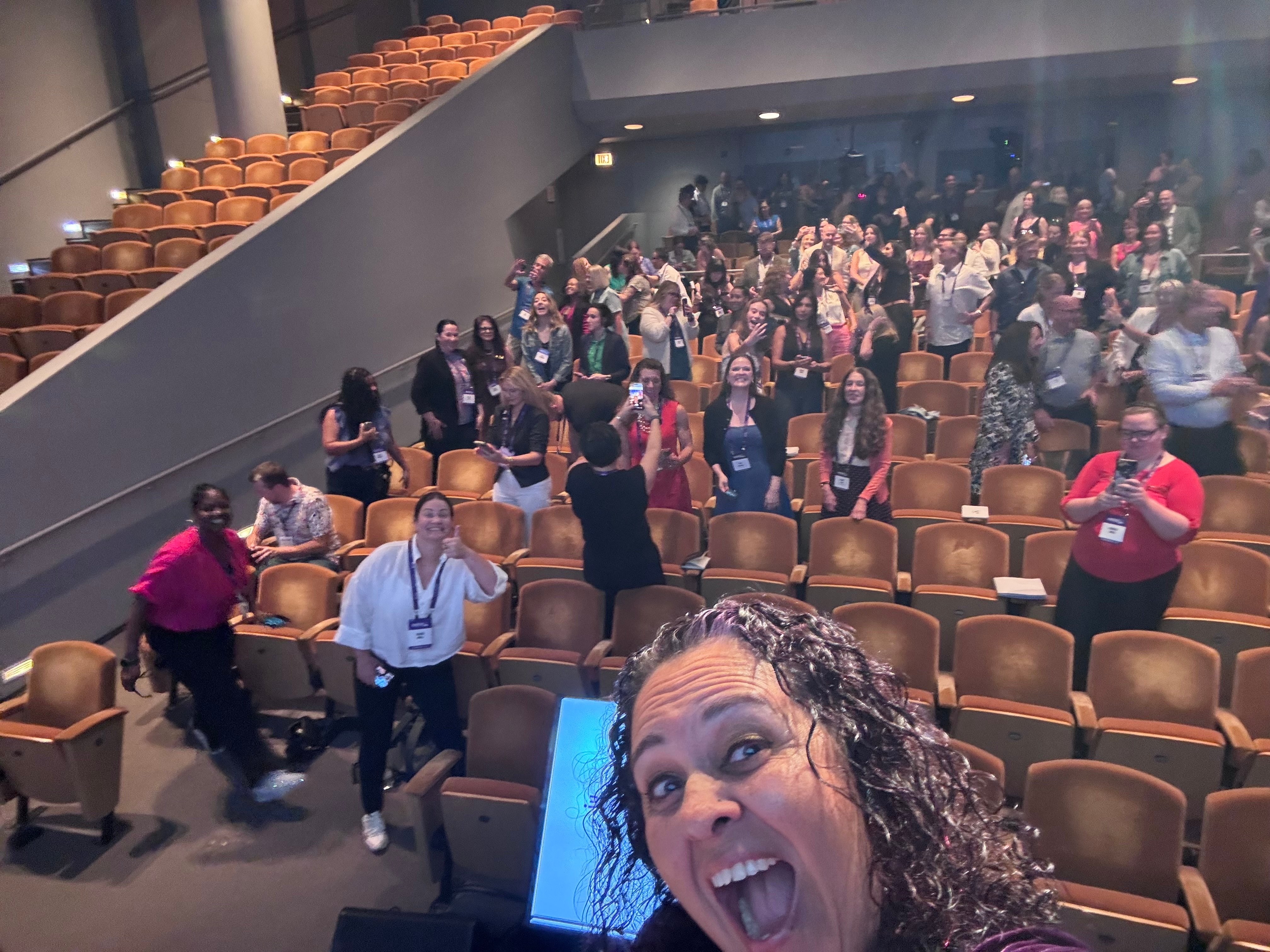
Image courtesy Dahlia El Gazzar
The hard part is getting clients to actually buy into these revamps, especially when the resistance comes from leadership, which, El Gazzar says, is often where it starts.
Internal change champions often come to her frustrated that their ideas aren’t being heard. “So they only need a big Dahlia megaphone behind them,” she adds, “like the Verizon guy saying, ’Can you hear me now?’”
Part of her role is to help teams feel empowered to question the way it’s always been done. “This is actually a mind shift,” she says. “It’s not only change for the sake of change.”
Key takeaway: The best ideas for your event may be in the conversations you’re avoiding.
Regulate the nervous system
In true El Gazzar fashion, she paints a picture to best prove an important point: Imagine, she says, someone missed their flight heading to an event, their bag didn’t make it, there was no Wi-Fi on the plane, and their 3-year-old just told them they hate them for leaving yet again. Now imagine them, on top of all that, arriving and immediately being asked to figure out a mobile app.
“You have to put yourself in that situation and make it as frictionless as possible,” says El Gazzar. “When tech is frictionless, that’s when it succeeds.”
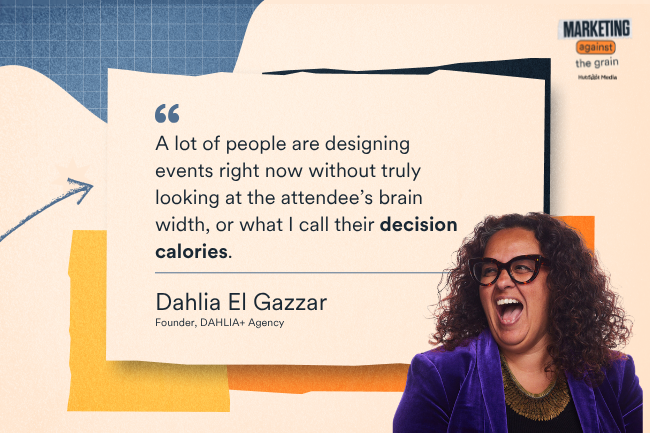 The basics matter just as much. At a recent live session El Gazzar hosted, one attendee said if they know where the bathrooms are and where to go on the show floor, they’re good to go.
Perhaps most important of all is how people are greeted. “People want to be spoken to, or checked on,” she says. “Hi, Brianne. How are you doing? How was your flight? Not: Did you register? Do you have a QR code?”
This only works if the staff themselves aren’t running on empty.
“Burnt-out teams will create burnt-out events,” says El Gazzar. She believes it so much, she has it printed on a sticker.
Key takeaway: Regulate the people running your event before you try to regulate the people attending it.
Energy is your strongest KPI
Most event teams already know their numbers: who registered, who showed up, how many tickets sold. El Gazzar calls these “vanilla KPIs.”
El Gazzar believes events are among the biggest marketing channels of an organization, yet they’re often disconnected from larger business strategies. “Event professionals are actually marketing strategists,” she says. “They just don’t take that title.” Event teams are on the right track when they shape events to match the business’s larger goals.
Thinking like marketers means tracking sentiment, how content is exchanged, and whether attendees return. If first-timers don’t come back, El Gazzar wants to know why.
The vanilla metrics can stay if leadership wants them. But the things teams test and measure beyond them, she says, are “what will be the drivers that will bring your stakeholders back to the next year,” or keep them engaged between conferences.
Key takeaway: Treat your event like the marketing channel it is.