
Your YouTube subscriber numbers don't matter.
According to a marketer who works with some of the top 10,000 creators on the platform (and she’s also a former HubSpotter!), subscriber count is now a vanity metric.
So what does matter? Essie Acolatse has some thoughts (and some of them might surprise you).
Meet the Master
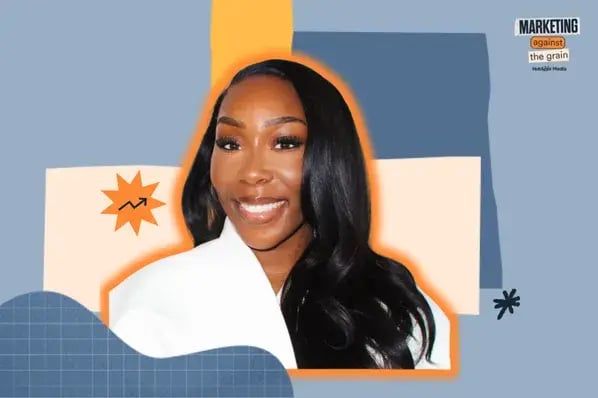
Essie Acolatse
Associate director, Creator success, Spotter
Lesson 1: Build curiosity gaps. Plural.
“Especially as a small business,” says Acolatse, “you want to create content in a way that you're teaching your audience something — and teaching them in a way where they feel like they can do it, too.”
Within the first 30 seconds of your video, Acolatse says, you should reconfirm the title or topic of your video and open up a curiosity gap — that itch you feel when you’re just dying to know what happens next. It might be as simple as a question and a tease that it’ll be answered by the end of the video.
So think of your YouTube videos like a TV show, where there’s an A plot and a B plot (and maybe C - Z plots, if you’re rewatching Lost). Before you close your first curiosity gap, you want to open another.
“You’re always going to have your setup, your progress, and your payoff,” Acolatse explains. “But within all of that, you’re going to open up curiosity gaps and continue those loops until the end [of the video].”
Lesson 2: Narrow your topics but broaden your formats.
“If you can make niche topics into broad formats,” Acolatse tells me, “that really helps [get people into] the top of your funnel.”
I confess to her I’m having a little trouble envisioning what this looks like.
Imagine, says Acolatse, that you’re a real estate agent launching a new YouTube channel. “You‘re thinking you’re just going to do a house tour and show people, ‘Look at this five-bedroom, six-bath house.’ But that is so boring and outdated.”
But how about this, she suggests: A real estate agent going door-to-door and asking 10 different millionaires how they got their house. It’s still a real estate lens, but it’s a familiar and accessible format.
She’s right — I would absolutely eat that up, and I am in no way in the market for a multimillion-dollar home.
So when you define your YouTube audience, think niche — the perspective, experience, or knowledge your brand can provide that nobody else can — and then wrap that up into a crowd-pleasing package.
Lesson 3: Long-form means long — but only if you earn it.
If you were looking for a sign to go long, here it is: More and more, people are watching YouTube on their TVs. Ten minutes? Pshaw. Think more like 15- to 30-minute videos — “22 minutes is a great sweet spot,” Acolatse suggests. “YouTube is serving up long content for people watching on connected TVs. So we need content to be longer.”
The corollary to this lesson is just as important as the lesson itself: You gotta earn it. “Don’t just make [your videos] longer because someone’s telling you to,” Acolatse tells me.
Like anything else in marketing, your audience will recognize filler for what it is. And if you’re not creating great content, they’re clicking or swiping on to something new. Your videos “still need to have substance to be valuable.”
“You want high-intent viewers,” she explains. “So you might have a video that has 10,000 views, but 10% of those people click through on your offer and sign up for something. That's far better than a 100k views on a video and a 0.5% [click-through rate].”
So stop thinking of YouTube as a broadcast channel. For marketers, it’s a powerful conversion engine.
Lingering Questions
This Week’s Question
What‘s a belief you held strongly five years ago that you’ve completely changed your mind on? —David Groechel, Founder, 11SIX24 Pickleball
This Week’s Answer
Acolatse: Five years ago, I believed the goal for creators and brands was to be everywhere. Post on every platform, chase every trend, and maximize reach. The thinking was that the more places you showed up, the more successful you would be.
Over time, I have completely changed my mind. The creators and brands building the most sustainable businesses today are not trying to be everywhere. They are intentional about where they show up and focus on the platforms and formats that allow them to build the deepest relationships with their audience.
Depth matters far more than breadth. When creators invest in platforms where their content can compound over time, they build loyal communities and stronger monetization opportunities.
And the biggest advantage a creator or brand could have is ownership of your audience, your storytelling, and the ecosystems where your content can continue to grow and deliver value long after it is published.
Next Week’s Lingering Question
Acolatse asks: As audiences become more fragmented and attention spans shorter, what are the most important things marketers should focus on today to actually earn and retain audience attention?
Bold Strategy
.png)

-1.png)

.png)
.png)
.png)

.png)
.png)