
“The best part about live sports is the community,” says Natalie Holder. She does paid marketing for Angel City FC, but her foundation isn’t spend. It’s community.
Here’s how she thinks about paid marketing differently (and how you can, too).
Meet the Master

Natalie Holder
Marketing campaigns and performance manager, Angel City FC
-
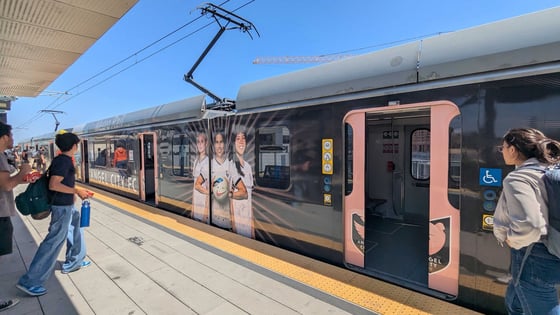
Claim to fame: Holder says that despite being the most stressful, out-of-home campaigns are her favorites to work on — like this full train wrap, a partnership with Metro Los Angeles, announcing ACFC’s 2026 season.
Lesson 1: Steal from organic before you spend on paid.
Holder’s feedback loop incorporates paid, organic, and even the ad agency that runs Angel City’s day-to-day ad platforms.
The agency might flag something the social team posted “and say, ‘Hey, this would be really great for our bottom-funnel campaign. Can we use it?’ And we'll pull that in.”
And when organic sees “a good positive trend, I will 100% try to capitalize on it and make content for it as well,” Holder says.
Holder’s constantly talking to the ACFC social media team. “They will tell us in real time what the general discourse is or whether something’s been doing really well, and then we’ll leverage that.”
One example is highlight videos from soccer matches. Last year, Holder tells me, social was doing “these really nice 10- or 15-second highlight videos, with fun clips and an end card promoting the next match.”
It performed well on social — and Holder says she’s now using similar highlight clips “in every single ad” promoting a match.
Lesson 2: Reflect your community in your creative.
Community has been the backbone of Angel City FC since day one. “We weren’t just like, ‘This city lacks a team, let’s sell a bunch of tickets and make another sporting event,” she says. “We really started out as a community brand first.”
And when you’re trying to grow a new fan base, think about who’s in your creative. “If you want more families, more people from the Pride community, if you want more diversity in your fan base — it has to be in your creative,” says Holder.
Emotional connection matters, but there’s a technical reason behind this, too. “Platforms are now so embedded with technology and auto-optimizations and AI features,” Holder explains, and it’s easier than ever to target the demographics featured in your creative collateral.
If you’re not leveraging those features, “then I don't think you're using your ad dollars properly,” Holder says.
“Have your creative really amplify what your brand is and who you’re targeting,” and the platforms can find that audience for you.
Lesson 3: Use paid to grow your community, not just convert it.
Paid marketing isn’t just about boosting ticket and merch sales. Holder is always trying to pull new people into the Angel City ecosystem, whether they’re in it for the soccer, the merch, or maybe they just “feel a sense of pride with who our fan base is.”
Right now, she’s putting paid behind “promoting camps and clinics for the summer to help the youth in Los Angeles,” which were already more than 60% full when Holder and I spoke last month. With that success, she expects her partnership with the community team to continue growing.
Reconsider how you think about paid — the goal isn’t always a sale. “We have a lot of testimonials from current season ticket members about how the people that they now sit beside with their season tickets all year long are now really good friends.”
This year’s community-building campaign might just be next year’s conversions.
Lingering Questions
THIS WEEK'S QUESTION
How do you bring human-centered storytelling and narratives into your campaigns, and how are those stories expressed differently across platforms?
—Kevin Wong, Chief Communications Officer, The Trevor Project
THIS WEEK'S ANSWER
At Angel City, every campaign starts with a simple question: Why should someone care? What is the goal of this ad? Whether I'm promoting a match or merchandise, I focus on telling stories that connect emotionally before asking people to take action.
For me, human-centered storytelling is about highlighting the experience — not just the event or action. That could mean capturing the energy of match day, celebrating a theme night (like Pride Night), showcasing the club's impact in Los Angeles, or tapping into the passion of our supporters. The goal is to make people feel like they're part of something bigger than a transaction. We want people in our total ecosystem, not just a one-time transaction. So our creative tells the many angles of Angel City.
How those stories come to life depends on the platform and the funnel. On Meta, I balance emotional storytelling in top-of-funnel with performance-driven creative that inspires action in the middle and bottom funnel.
Google messaging is more intent-based and direct, while out-of-home is designed to create direct, memorable brand awareness. The creative evolves by channel, but the narrative stays consistent, ensuring every touchpoint reinforces the same brand story.
NEXT WEEK'S LINGERING QUESTION
Holder asks: What's one marketing belief you held early in your career that you've completely changed your mind about?


![The Tiny Layout Tweak That Led to 20% More Conversions [Test Results]](https://marketingagainstthegrain.com/hubfs/rebecca-hinton-matg-blog.webp)

![Stop wasting homepage traffic [3 big mistakes backed by 10+ years of data]](https://marketingagainstthegrain.com/hubfs/angela-gomez-matg-blog.webp)


